
- All
- Product Name
- Product Keyword
- Product Model
- Product Summary
- Product Description
- Multi Field Search
Please Choose Your Language
Views: 0 Author: Site Editor Publish Time: 2026-08-31 Origin: Site


Selecting the right blister material is a balancing act between pharmaceutical compliance, drug stability, and production economics. Pharmaceutical manufacturers constantly weigh material costs against product safety. While the industry standard often defaults to standard thermoforming, highly sensitive active pharmaceutical ingredients (APIs) are driving a rapid shift toward cold-forming materials.
However, determining whether PVC or Alu-Alu is "better" depends entirely on your specific barrier requirements, budget limits, and current equipment infrastructure. In this article, you will explore the mechanical differences between these primary packaging formats. We evaluate how your material choice directly impacts production speeds, tooling setups, and environmental footprints. You will learn practical strategies to optimize your packaging line. Ultimately, you will gain a clear framework to select the ideal packaging solution for your facility.
You cannot evaluate packaging efficiency without understanding the fundamental mechanics of how materials form. The distinction lies in the manipulation of physical properties during the forming stage.
Thermoforming relies on controlled thermal manipulation. The machine uses heat to soften the rigid plastic web. Once softened, compressed air or mechanical plugs push the material into specific mold cavities. This process creates precise, defined shapes.
The barrier profile of standard PVC blister packaging provides moderate defense. It yields a standard water vapor transmission rate (WVTR) and oxygen transmission rate (OTR). Its defining advantage is absolute transparency. Operators and automated cameras can easily conduct visual inspections. You will find this material best suited for standard OTCs, stable capsules, and hard tablets. These products generally do not degrade when exposed to normal ambient conditions.
Common Mistake: Operators often run heaters too hot to increase speed. This causes material thinning in the cavity corners. Always calibrate heating zones to match your specific web thickness.
Cold forming eliminates heat from the process entirely. The system relies entirely on mechanical stamping. Solid metal pins or plugs stretch an aluminum laminate into the required shape. This requires immense mechanical force.
The resulting barrier profile is exceptional. Alu-Alu provides near-zero permeability for moisture, light, and ambient gases. It serves as an impenetrable vault. You should choose cold forming for hygroscopic drugs and light-sensitive APIs. It remains the standard for formulations requiring extended shelf-life in extreme climate zones.
Material Comparison Chart
| Feature | PVC (Thermoforming) | Alu-Alu (Cold Forming) |
|---|---|---|
| Forming Method | Heat + Compressed Air/Plugs | Mechanical Stamping (No Heat) |
| Barrier Protection | Moderate | Maximum (Near-Zero Permeability) |
| Visual Clarity | Transparent | Opaque |
| Primary Application | Stable OTCs, standard tablets | Hygroscopic, light-sensitive APIs |
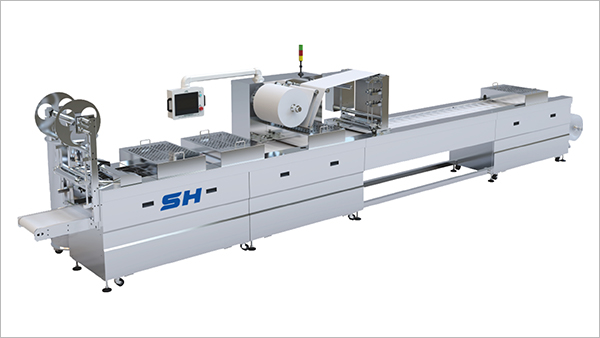
Upgrading a packaging format involves more than just changing a roll of film. Your material dictates the mechanical realities of the entire packaging line.
Tooling complexity changes dramatically between formats. Alu-Alu requires dedicated cold-forming stations. The tooling used for cold forming is generally heavier and much more complex. Engineers build these molds from high-grade steel to withstand continuous stamping impacts. Consequently, they are more expensive than standard PVC thermoforming molds.
Changeovers take longer. Technicians must align cold-forming pins perfectly. A misalignment of a fraction of a millimeter will tear the aluminum foil. This precision demands highly skilled operators.
Cold forming behaves differently under tension. The foil laminate lacks the natural elasticity of heated plastic. Therefore, cold forming requires multiple tensioning and forming zones to prevent laminate tearing.
This reality often requires a machine featuring a larger physical footprint. The web length extends further across the production floor. You must allocate adequate factory space when integrating this format.
Thermoforming PVC is significantly faster. Heated plastic stretches quickly and sets instantly upon cooling. Conversely, cold forming requires a slower, more deliberate mechanical stroke. A rapid, aggressive punch would stretch the aluminum foil beyond its tensile limits. This creates microscopic pinholes. Therefore, you must sacrifice pure speed to maintain the integrity of the barrier.
Best Practice: When calculating production schedules, assume a 20% to 30% reduction in cycles-per-minute when switching from thermoforming to cold forming.
Understanding how your materials behave directly influences your operational economics. Cavity layout and waste generation shape the financial viability of a production run.
Material properties dictate blister geometry. Alu-Alu cannot form sharp angles. The mechanical stretching process requires gradual slopes. Cavities must be oversized. They become wider and shallower to prevent the laminate from tearing during the plunge stroke.
This design constraint creates a ripple effect. You can fit fewer blisters per web. The resulting layout increases material consumption per dose. In contrast, PVC allows for high-density nesting of cavities. The thermoforming process handles sharp, tight angles easily. This capability maximizes output per square meter of material.
The upfront cost of laminate rolls significantly exceeds standard PVC rolls. Aluminum foil laminates involve complex manufacturing processes. However, you must also calculate hidden costs.
Consider the secondary packaging impact. Because Alu-Alu blisters require more web space per dose, the final blister cards are physically larger. These larger cards require larger secondary packaging sizes. You will need bigger cartons. Bigger cartons mean fewer units fit on a standard shipping pallet. These compounded factors shift your logistical metrics considerably.
| Metric | Thermoforming (PVC) | Cold Forming (Alu-Alu) |
|---|---|---|
| Cavity Nesting Density | High | Low |
| Tooling Cost | Lower | Higher |
| Secondary Carton Size | Standard/Compact | Enlarged |
| Web Tension Sensitivity | Low | High |
Given its superior barrier qualities, many facilities assume aluminum is the ultimate upgrade. However, choosing the strongest barrier is not always the smartest operational decision.
Over-engineering your packaging drains resources. Using Alu-Alu for highly stable drugs unnecessarily inflates per-unit costs. It also reduces your production agility.
If a paracetamol tablet remains stable in standard environments, cold forming offers no clinical benefit. It only slows down the output. You should reserve cold forming exclusively for APIs that demand it. Matching the material to the exact chemical necessity preserves your operational budget.
Quality control methodologies diverge sharply based on material choice. Clear plastic is easy to inspect. Standard cameras verify product presence, color, and breakage instantly.
Unlike clear PVC, opaque Alu-Alu blocks visible light entirely. You cannot see the product inside the sealed cavity. This requires advanced vision systems on your Blister Packing Machine. Manufacturers must install specialized pinhole detectors. These systems often use x-ray technology or highly specialized capacitive camera setups. These upgrades verify product presence and integrity but add complexity to line maintenance.
Common Mistake: Relying on simple weight-checkers to verify blister contents in opaque packaging. Empty cavities or broken tablets often pass weight checks if the tolerances are too wide. Always use dedicated in-line scanning.
Environmental scrutiny in pharmaceutical manufacturing continues to rise. Regulators and consumers demand greener production models. Packaging scrap represents a massive portion of factory waste.
Regulators have historically scrutinized standard blister plastics for their chlorine content. Incineration can release harmful byproducts if not managed properly. Furthermore, sorting small blister cards challenges municipal recycling systems.
However, modern rigid PVC recovery processes are improving rapidly. Industry consortiums are developing specialized chemical recycling facilities. These advancements help mitigate the historical environmental footprint.
Aluminum itself stands as a highly recyclable material. Yet, blister films are rarely pure aluminum. Cold-form foils feature a multi-layer laminate structure. They typically combine Nylon (OPA), Aluminum, and a PVC sealing layer.
This composite structure complicates standard recycling streams. Separating these bonded layers requires immense energy. While the barrier is superior, the end-of-life disposal remains environmentally taxing.
Forward-thinking facilities no longer view edge-trim as garbage. They implement waste-to-value strategies. Modern factories utilize specialized shredders right on the production floor.
These strategies help minimize environmental impact while recovering a portion of the raw material costs.
Selecting the optimal format requires analyzing clinical needs against production realities. Follow these practical scenarios to align your strategy.
Your product pipeline consists of robust molecules. They resist moisture and light degradation. Production demands high throughput.
Recommendation: Choose PVC. If you need a slight barrier upgrade, select PVDC-coated PVC. This approach maximizes machine speed and cavity density. You keep tooling costs low and changeovers brief.
You manufacture expensive, highly sensitive compounds. These drugs travel across diverse global climate zones. Exposure to humidity destroys the API.
Recommendation: Select Alu-Alu. Prioritize product efficacy and absolute barrier protection over raw production speed. The investment in heavier tooling and advanced inspection systems protects the clinical value of the drug.
Your facility handles a highly diverse client portfolio. Today you run a stable vitamin; tomorrow you package a sensitive cardiovascular medication.
Recommendation: Invest in a hybrid/combo machine. You need a platform capable of rapid changeovers between thermoforming and cold forming. Flexibility generates revenue in the CMO environment.
There is no universal "better" material—only the correct material for your specific drug profile and operational goals. You must analyze the chemical fragility of your product first. PVC dominates in speed, layout density, and visual inspection ease. Alu-Alu reigns supreme in absolute environmental protection.
Before finalizing a material shift, audit your existing packaging lines meticulously. Ensure your machinery can handle the specific tooling, web tension, and inspection demands of the chosen format. Upgrading to a heavier barrier film often requires significant mechanical retrofitting.
Consult with equipment engineers early in your planning phase. Evaluate whether your current setup can be retrofitted safely. If retrofitting compromises output heavily, a new, dual-capable machine is required for your next product rollout.
A: Yes, combination machines exist. However, they require distinct forming stations. You will need different tooling sets and longer changeover times to switch between thermoforming heat plates and cold-forming mechanical stamps.
A: You must integrate in-line pinhole detection systems. These systems utilize intense light transmission during the forming stage. A sensor placed beneath the web detects any microscopic light leaking through the stretched aluminum foil.
A: Yes, PVDC coatings on PVC provide a significant barrier upgrade. This combination blocks moisture much better than standard plastic without sacrificing the rapid thermoforming speed and cavity density you expect from standard setups.


