
- All
- Product Name
- Product Keyword
- Product Model
- Product Summary
- Product Description
- Multi Field Search
Please Choose Your Language
Views: 0 Author: Site Editor Publish Time: 2026-08-16 Origin: Site


Packaging plays a critical role in pharmaceutical integrity. Product degradation or regulatory non-compliance can immediately halt production lines. You simply cannot afford sealing failures. We must bridge the gap between understanding basic packaging concepts and evaluating a specialized pharmaceutical blister packing machine for high-yield operations. Simple sealers no longer meet strict modern regulatory demands. Selecting the right equipment requires careful alignment. You must match your specific production volume, format requirements, and material types with proven engineering principles. Tablets and capsules behave differently during automated feeding. Thermoforming and cold forming demand distinct mechanical forces. We will explore how these variables intersect. You will learn how to evaluate machine mechanics, understand format handling, and apply a reliable purchasing framework. Achieving total compliance means leaving no detail to chance. We will break down exactly what makes modern packaging lines succeed.
Inconsistent sealing or forming directly causes micro-leaks. These microscopic breaches compromise drug stability over time. They guarantee quality control (QC) failures during rigorous testing. You need precise, repeatable mechanical actions to maintain product safety.
Modern equipment relies on a synchronized sequence of events. Each stage must function perfectly to prevent costly material waste.
You can trust modern engineering to protect your batches. High-end machines routinely achieve sub-1% reject rates. They accomplish this through integrated inline camera systems and automated shift-register rejection protocols. If a camera spots a broken tablet, the machine tracks that specific section. It automatically ejects the flawed card after the punching stage.
Purchasing a machine without understanding format-specific limitations causes severe operational headaches. Incompatible feeders lead to frequent jams. This directly decreases your Overall Equipment Effectiveness (OEE). You must tailor your feeding mechanism to your exact product geometry.
Tablets present unique geometric challenges. You might process flat-faced, biconvex, or heavily embossed shapes. A generic feeder cannot handle all variations. The equipment requires dedicated track feeders. These angled tracks align the tablets into single-file rows. Oscillating brush systems then gently sweep them into the cavities. This brushing action must remain calibrated. Too much force causes edge chipping. Too little force leaves pockets empty.
Capsules pose entirely different problems. Gelatin and HPMC capsules are fragile. They also feature a lightweight, aerodynamic profile. They bounce easily if dropped too fast. Standard tablet brushes will crush them or flip them out of the pockets. To solve this, manufacturers use vibratory hoppers. These hoppers feed specialized directional guide tubes. The tubes orient each capsule vertically or horizontally, ensuring precise seating inside the blister pocket without applied pressure.
Evaluating a modern Blister Packing Machine requires a close look at format changeovers. Buyers must assess the exact time needed to swap tablet tooling for capsule tooling. Tool-less changeover designs significantly reduce downtime. They remain essential for multi-product facilities handling diverse portfolios.
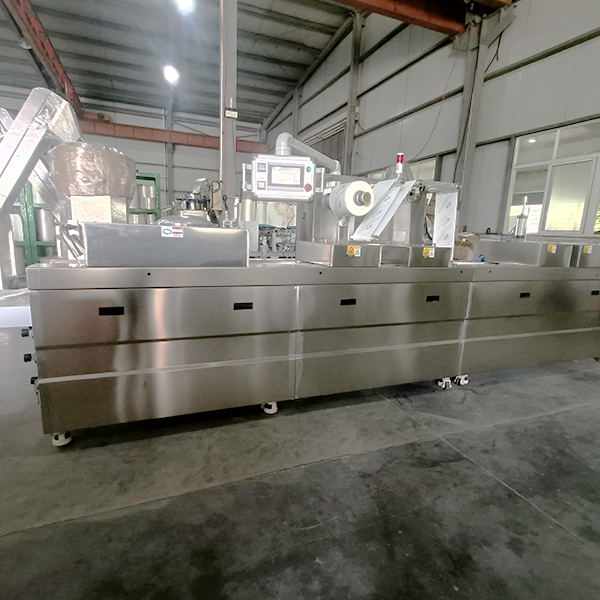
Scale dictates your purchasing strategy. Over-specifying drains your capital expenditure needlessly. Under-specifying creates immediate bottlenecks during a commercial rollout. You must align equipment capabilities with realistic production forecasts.
These compact units serve distinct, low-volume purposes. They target research and development labs, clinical trial runs, and highly specialized orphan drugs. They feature a minimal physical footprint. They typically use flat-plate (platen) sealing. You will see slower throughput, but you gain massive flexibility. Operators can swap materials and molds quickly for small experimental batches.
Commercial-scale manufacturing demands robust automation. You must choose between intermittent and continuous sealing mechanisms based on your primary materials.
| Machine Category | Primary Sealing Method | Target Application | Key Operational Advantage |
|---|---|---|---|
| Lab / Small-Batch | Intermittent Platen | R&D, Clinical Trials | High flexibility, rapid small changeovers |
| Commercial Intermittent | Intermittent Platen | Alu-Alu, Complex Shapes | Superior seal pressure, extended dwell time |
| Commercial Continuous | Continuous Rotary | High-Volume PVC/Alu | Maximum blisters per minute, high throughput |
You must practice active risk mitigation during selection. We warn against purchasing proprietary tooling systems. Closed ecosystems limit your aftermarket sourcing. They lock you into expensive vendor contracts. Emphasize open-architecture platforms to retain control over your maintenance budget.
Drug formulations often exhibit sensitivity to moisture, light, and oxygen. Hygroscopic products require aggressive barrier protection. Not all machines can process every packaging material. You must verify thermal and mechanical limits.
Thermoforming relies heavily on controlled heat. The machine softens plastic webs until they become pliable. Compressed air or mechanical plugs then push the plastic into molds. This method yields high transparency for excellent product visibility. It also allows for much faster production speeds. However, basic PVC offers lower barriers against moisture compared to advanced laminates.
Cold forming entirely removes heat from the cavity creation process. It relies solely on mechanical stamps. These Teflon-coated stamps physically deform aluminum foil laminates into shape. Alu-Alu provides a 100% absolute barrier against light, moisture, and oxygen. It represents the gold standard for sensitive active pharmaceutical ingredients (APIs).
You must understand the implementation reality of cold forming. Alu-Alu requires a significantly larger blister card footprint. You cannot form aluminum with sharp, 90-degree angles without tearing the material. The pockets must feature gradual, sloped edges. This geometry reduces the overall product yield per web compared to thermoforming. Ensure your chosen machine's stroke length easily accommodates this wider footprint.
Equipment evaluation goes beyond raw speed. Failing to evaluate a vendor's compliance standards leads to disaster. Poor post-installation support causes costly delays in commercial deployment. You need a structured framework.
Apply these strict criteria when reviewing vendor proposals. They separate reliable partners from basic suppliers.
Take direct action for your next steps. Require physical sample runs during the FAT phase. Do not accept generic test materials. Demand that the vendor runs your specific placebo or active product. Provide your exact packaging materials. Only sign off when the equipment demonstrates perfect sealing integrity with your actual inventory.
Selecting the ideal packaging equipment requires balancing current realities with future ambitions. You must weigh tablet and capsule differences alongside thermoforming and cold-forming material needs. Production scale ultimately dictates your mechanical requirements, pushing you toward either platen or rotary designs. Prioritize equipment offering rapid, tool-less format changeovers. Uncompromising sealing integrity protects patient safety and drives your operational profitability. We encourage you to consult immediately with a dedicated packaging engineer. They will help you map out the exact footprint, throughput targets, and custom tooling required for your facility.
A: Platen machines use flat plates for intermittent sealing. This provides a longer dwell time and higher pressure, making it ideal for tough materials like Alu-Alu. Rotary machines use continuous heated cylinders. This design drastically increases production speed and works best for standard PVC thermoforming applications.
A: Yes. Many modern hybrid machines process both materials. However, they require modular stations. Operators must physically swap out heating plates for mechanical forming stations and adjust the feeding mechanisms depending on the active material.
A: Modern equipment utilizes advanced inline vision inspection systems. High-resolution cameras scan every formed cavity after the filling stage. If they detect an empty pocket or a broken tablet, a shift-register tracks that specific card and automatically ejects it into a reject bin after cutting.
A: Realistic industry benchmarks place changeovers at 30 to 45 minutes for modern equipment featuring tool-less designs. Conversely, older legacy machinery often requires several hours and dedicated hand tools to complete a full format and material swap.


