
- All
- Product Name
- Product Keyword
- Product Model
- Product Summary
- Product Description
- Multi Field Search
Please Choose Your Language
Views: 0 Author: Site Editor Publish Time: 2026-08-08 Origin: Site


Selecting the wrong packaging equipment leads directly to production bottlenecks, excessive material waste, and critical compliance failures. Manufacturers simply cannot afford these operational disruptions in today's fast-paced environment. Buyers face a frustrating reality when sourcing equipment. High-speed claims found in glossy sales brochures rarely reflect actual Overall Equipment Effectiveness (OEE). Your real-world output drops significantly during format changeovers, maintenance stops, or complex feeding scenarios. You need a system strictly tailored to your specific product mix and daily shift patterns.
This guide provides a pragmatic, technical evaluation framework to navigate the selection process. We will help you match exact production requirements with the correct machine architecture. Read on to discover how to properly evaluate material compatibility, mechanical flexibility, and strict industry compliance standards.
Calculating your required output forms the foundation of any equipment purchase. You must define baseline metrics accurately before reviewing machine specifications. Manufacturers typically advertise blisters-per-minute (BPM) as a core metric. However, theoretical maximum speeds rarely translate to sustained daily output. You must calculate your required BPM against actual shift lengths. Always factor in routine maintenance stops, operator breaks, and material roll replenishments. This pragmatic approach reveals your true throughput requirements.
You must choose between flat-plate (platen), rotary, and roller machine architectures. Each design serves distinct production strategies. Flat-plate machines operate slower than continuous motion models. However, they offer maximum flexibility and superior sealing pressure. This high pressure easily accommodates complex shapes and rigid materials like Alu/Alu. Flat-plate designs perform best for small-to-medium batches or clinical trial runs.
Rotary and roller machines utilize continuous motion technology. They deliver exceptionally high-speed output for standard PVC/Alu combinations. These platforms suit mass production environments perfectly. They operate most efficiently when format changes remain infrequent. Frequent stops severely diminish their speed advantages.
Below is a direct comparison to guide your architectural decision:
| Machine Architecture | Motion Type | Best Material Suitability | Ideal Production Scenario | Speed Range |
|---|---|---|---|---|
| Flat-Plate (Platen) | Intermittent | Complex Alu/Alu, rigid films | Small-to-medium batches, clinical trials | Low to Medium |
| Rotary | Continuous | PVC/Alu, standard foils | Mass production, rare changeovers | High |
| Roller | Continuous | PVC/PVDC/PET to Alu | High-volume continuous runs | High |
Risk mitigation remains crucial during this phase. We strongly warn against over-buying capacity. Purchasing a high-speed rotary machine seems appealing on paper. However, it quickly loses its ROI advantage if your production requires multiple daily changeovers. Align your machine architecture strictly with your actual product mix. Flexibility often trumps raw speed in diverse manufacturing environments.
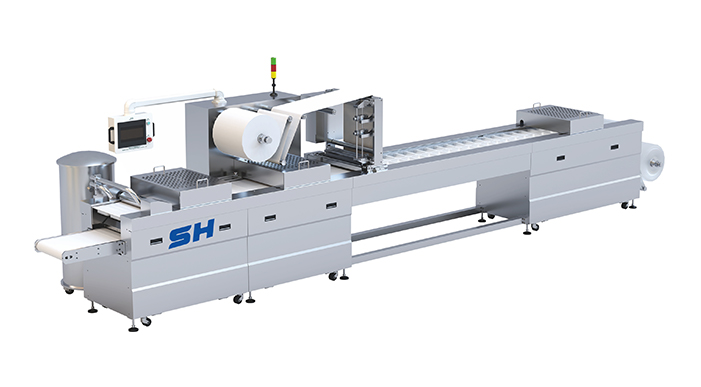
Material selection heavily influences your machine requirements. The right packaging material ensures product efficacy and patient safety. You must evaluate your product's sensitivity to environmental factors. This determines whether you need thermoforming or cold forming capabilities.
Many facilities require hybrid capabilities. Contract manufacturing organizations (CMOs) frequently handle diverse product portfolios. We highly recommend evaluating hybrid machines for these environments. A premium Blister Packing Machine can switch between thermoforming and cold forming. Fast switching maximizes equipment utilization. It allows CMOs to accept wider varieties of client contracts. Ensure the equipment allows rapid swapping of heating stations and heavy-duty forming presses.
The feeding system represents a critical potential bottleneck. You can purchase the fastest sealing station on the market. However, your machine's actual speed remains limited by its feeding system's accuracy. If the feeder skips cavities, the entire line suffers. Empty pockets trigger rejection protocols, wasting expensive packaging materials.
Solid dose variability complicates the feeding process. Different shapes demand entirely different handling strategies. Standard tablets usually require straightforward mechanisms. You should evaluate sweepers, dedicated tracks, and vibration chutes. Symmetrical tablets feed reliably through these standard gravity or vibration-assisted channels.
Capsules present entirely different mechanical challenges. They possess elongated shapes and distinct weight distributions. A highly specialized capsule blister packing machine relies entirely on accurate orientation. Generic sweepers often fail to seat capsules properly. You must specify requirements for specialized orientation rollers. Brush feeders also prevent denting while ensuring proper seating. These mechanisms gently guide the capsule into the cavity horizontally. They prevent product damage and eliminate jams at the sealing station.
Advanced integration separates modern equipment from legacy systems. High-speed feeding inevitably leads to occasional errors. You must assess the need for vision inspection systems. Camera integration immediately post-feeding acts as a vital quality gateway. These cameras scan every cavity before the sealing station applies the lidding foil. The system identifies empty pockets, fragmented doses, or incorrect colors. It logs the error and ejects the specific blister card downstream. Catching defects before sealing saves money and ensures absolute patient safety.
Modern packaging lines demand high availability. Maximizing your return on investment depends heavily on minimizing planned downtime. You must scrutinize the mechanical features dictating efficiency. Every minute spent adjusting format parts reduces your daily yield.
| Drive Technology | Indexing Precision | Maintenance Needs | Long-term Reliability |
|---|---|---|---|
| Mechanical Cams | Moderate, degrades over time | High (lubrication, wear parts) | Prone to mechanical drift |
| Servo Motors | Extremely high, programmable | Low (fewer moving parts) | Maintains exact accuracy over years |
Regulatory compliance dictates every aspect of pharmaceutical manufacturing. You cannot evaluate a machine purely on mechanical performance. The equipment must align perfectly with Current Good Manufacturing Practices (cGMP). Failing compliance audits leads to disastrous financial consequences.
Sanitary design forms the baseline of cGMP compliance. You must look closely for cantilever or balcony designs. These architectural layouts strictly separate drive mechanisms from product handling zones. Motors, chains, and lubricants remain housed in the back cabinet. The product and packaging films run along the clean front face. This separation prevents mechanical debris from causing cross-contamination. Operators can also clean the smooth front surfaces rapidly.
Documentation acts as your legal shield. A machine possesses zero commercial value without standard validation protocols. The manufacturer must supply comprehensive validation documentation. This includes Design Qualification (DQ), Installation Qualification (IQ), Operational Qualification (OQ), and Performance Qualification (PQ). These documents prove the machine meets its stated specifications legally. Never accept equipment from vendors who charge exorbitant extra fees for basic IQ/OQ/PQ packets.
We advise buyers to mandate a rigorous Factory Acceptance Testing (FAT) protocol. Do not rely on generic vendor demonstrations. Conduct the FAT using your actual product and specific film materials. Run the machine at your required BPM for an extended period. Identify heating issues, feeding jams, or software glitches before final shipment. Fixing a fundamental design flaw at the vendor's facility costs nothing. Fixing it on your production floor costs thousands in lost revenue.
Finally, evaluate the vendor's after-sales support infrastructure. A machine will inevitably require maintenance. Evaluate their spare parts availability and delivery timelines. Check their remote troubleshooting capabilities through secure VPN connections. Crucially, confirm their domestic technician presence. Waiting weeks for an overseas technician to arrive destroys your quarterly production targets. Partner only with manufacturers offering robust, localized support networks.
Selecting the ideal packaging equipment requires a systematic approach. You must start by defining your exact product profile and stability needs. Calculate your realistic throughput based on actual shift patterns, not theoretical maximums. Evaluate the mechanical flexibility required to handle varying solid doses efficiently. Finally, verify all cGMP features and validation documentation thoroughly to ensure regulatory safety.
Rushing this decision leads directly to wasted capital and constant operational headaches. Take control of the procurement process early. We highly recommend drafting a detailed User Requirement Specification (URS) document. Outline every technical, material, and compliance requirement clearly. Send this comprehensive URS to your shortlisted manufacturers before requesting initial quotes.
A: The typical lead time ranges from 3 to 6 months. This timeline depends heavily on format complexity and custom feeding requirements. Standard models ship faster, while machines requiring specialized inspection cameras or unique cold-forming presses take longer to engineer and validate.
A: Yes, a single machine easily handles both dose forms. However, it requires purchasing separate, dedicated format parts like custom molds and specific feeding channels. Operators must re-calibrate the feeding stations and swap out sweepers for brush feeders during changeovers.
A: Semi-automatic equipment requires manual feeding or manual film transfer, making it suitable mainly for R&D. Fully automatic machines handle the entire web-fed process, from thermoforming to final cutting. They require operator intervention only for roll changes and general system monitoring.
A: The higher cost of Alu/Alu equipment and materials is justified entirely by shelf-life requirements. Highly hygroscopic or light-sensitive active pharmaceutical ingredients (APIs) degrade rapidly in PVC. Alu/Alu provides an absolute barrier, ensuring regulatory compliance and patient safety for sensitive compounds.


