
- All
- Product Name
- Product Keyword
- Product Model
- Product Summary
- Product Description
- Multi Field Search
Please Choose Your Language
Views: 0 Author: Site Editor Publish Time: 2026-08-23 Origin: Site


Scaling production output often directly conflicts against managing capital expenditure. Pharmaceutical, nutraceutical, and contract packaging operations face this tension daily. Finding the perfect equipment balance remains a critical industry hurdle. Choosing the right packaging machinery goes far beyond simply chasing maximum operating speed. You must carefully match equipment capabilities to your specific daily batch sizes. Facility space and available skilled labor also heavily influence this crucial choice. Buying blindly based on top-speed metrics usually creates costly downstream bottlenecks and unexpected delays. This guide delivers a strict, evidence-based evaluation framework to simplify your purchasing decision. We will compare automatic and semi-automatic equipment thoroughly. You will learn to weigh format flexibility, physical operational demands, and strict regulatory compliance needs. By the end, you will confidently identify the exact automation tier your manufacturing facility truly requires to succeed.
Every major equipment purchase starts from a definitive operational breaking point. Recognizing these triggers early prevents premature spending and avoids costly delayed investments. Manual labor bottlenecks often serve as the primary catalyst for upgrading machinery. Your production team might struggle to meet daily quotas during seasonal demand spikes. Worker fatigue inevitably leads to inconsistent output and unpredictable shift yields.
High defect rates represent another critical trigger for facility managers. You might notice an increase in micro-leaks, misaligned seals, or cosmetic film damages. These defects erode your profit margins and damage brand reputation. Sometimes, strict regulatory compliance upgrades force your hand into purchasing new equipment. Modern pharmaceutical guidelines increasingly demand rigorous data logging and automated reject verification. Outdated manual processes simply cannot meet these stringent track-and-trace requirements.
You must establish clear success metrics before contacting any equipment vendor. These baseline numbers will guide your entire evaluation process and prevent emotional purchasing decisions. We recommend tracking three critical performance indicators to justify your machinery investment.
Semi-automatic models rely heavily on direct manual operator intervention. The architecture intentionally keeps the machine mechanically simple and highly accessible. A trained technician typically handles manual film feeding from the primary roll. They manually guide the forming material into the heating and pressing stations. After the machine forms the cavities, operators manually place the products into the pockets.
Finally, they initiate the sealing process using a mechanical foot pedal or a dual-button safety switch. This hands-on approach removes complex servo motors and intricate automated feeding tracks from the design. It creates a robust, straightforward piece of equipment requiring minimal software troubleshooting.
These units offer distinct strategic advantages for specific production environments. First, they drastically lower your initial capital expenditure. This significantly reduces upfront financial risk for startup brands or contract packagers testing new markets. You avoid locking massive amounts of capital into a single, specialized production line.
Second, they provide unmatched format agility. You can execute tooling changeovers incredibly fast without requiring specialized engineering support. This agility perfectly suits facilities managing multiple, small-batch SKUs daily. Finally, their compact footprint fits easily into smaller cleanrooms or restricted laboratory environments. You do not need to redesign your entire facility layout to accommodate these units.
However, semi-automatic systems carry notable operational limitations affecting long-term scalability. Your daily throughput remains entirely dependent on operator physical stamina and skill level. As worker fatigue sets in toward the end of a shift, production speeds naturally plummet. Throughput inconsistency makes precise production scheduling very difficult.
Furthermore, manual intervention drastically increases the risk of human error. Operators might accidentally skip a cavity during product placement. Misaligned seals or incorrect cutting alignments occur more frequently when relying on visual estimations. These systems struggle to maintain the strict uniformity required for massive commercial batch releases.
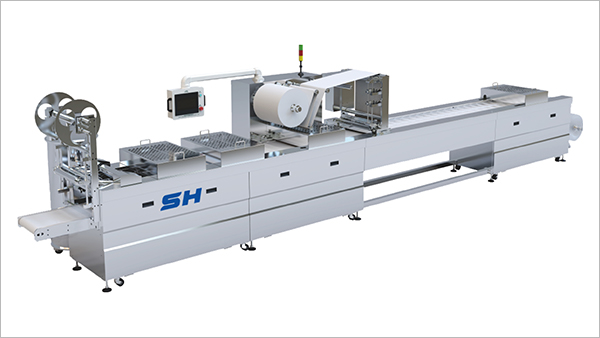
A high-performance Blister Packing Machine operates on a continuous, seamless web-fed process. These robust systems handle the entire packaging lifecycle autonomously after initial setup. The machine automatically pulls the base film through specialized heating plates. It then manages the thermoforming or cold forming stations using precise pneumatic pressure.
The architecture seamlessly integrates automated product feeding directly into the formed web. Next, it guides the lidding foil into the sealing station using advanced registration marks. The system handles continuous indexing, lot code embossing, and final individual punching. Operators merely monitor the primary PLC interfaces and replenish bulk raw materials when prompted.
The strategic advantages shine brightest in continuous, heavy-duty production scenarios. You achieve significant financial returns through drastic direct labor reductions. Per-unit production costs plummet as your total output scales up. One skilled operator can effectively manage multiple automatic lines simultaneously.
Servo-driven precision ensures uniform seal integrity across every single batch. The system applies identical pressure and temperature to every unit, minimizing material waste. This consistency actively prevents costly product recalls and consumer complaints. Additionally, these machines arrive highly integration-ready. They connect flawlessly to downstream cartoning, bundling, and serialization equipment to form a complete packaging gallery.
Despite their immense power, automatic machines present certain practical limitations. They require substantial initial investment capital and highly complex installation procedures. Facilities must provide dedicated water chillers and heavy-duty pneumatic supply lines to run them. The sheer size of these lines demands extensive, dedicated cleanroom space.
Tooling changeovers take much longer compared to mechanically simpler models. Technicians must precisely align complex feeding tracks, sealing rollers, and punching dies. This involved mechanical alignment makes automatic units highly inefficient for very small production runs. If you change formats three times a day, your automatic machine will sit idle most of the time.
Evaluating your production volume against batch frequency reveals your exact break-even point. A single SKU running continuously for weeks justifies upgrading immediately to automatic production. High-volume runs effortlessly absorb the longer setup times of complex machinery.
However, producing twenty different custom SKUs weekly demands semi-automatic agility. You must carefully calculate the specific volume where automated labor savings offset the higher equipment costs. This specific numerical threshold dictates your ideal automation tier. Never buy a high-speed automatic line if your primary business relies on small, highly variable contract orders.
You must rigorously assess compatibility between machine capabilities and your target packaging materials. Compare ALU/ALU cold forming needs against standard PVC/ALU thermoforming requirements. Cold forming requires significantly larger floor space to accommodate larger forming stations. It also requires shallower draw depths to prevent foil tearing.
Next, evaluate your specific product feeding requirements to prevent operational jams. For example, a high-speed capsule blister packing machine requires dedicated brush boxes to sweep products into cavities. Vibratory feeding bowls might also be necessary to orient specific capsules correctly before placement. Ensure the machinery handles your exact product dimensions without crushing delicate solid doses.
Regulatory compliance forms the absolute backbone of pharmaceutical and nutraceutical manufacturing. You must carefully compare validation requirements, including stringent IQ, OQ, and PQ protocols. Install Qualification, Operational Qualification, and Performance Qualification prove your machine operates within specified safety parameters.
Fully automatic systems typically include built-in data integrity features conforming to CFR 21 Part 11. They offer comprehensive audit trails, electronic signatures, and multi-level password protection. Automated reject stations utilize advanced camera inspection systems to identify empty pockets or cracked tablets. Conversely, semi-automatic models often lack these advanced digital tracking capabilities. You must manually inspect outputs, which introduces compliance risks during rigorous external audits.
| Evaluation Criteria | Semi-Automatic Systems | Fully Automatic Systems |
|---|---|---|
| Best Suited For | R&D, clinical trials, high-mix/low-volume batches | Commercial scale, low-mix/high-volume runs |
| Changeover Speed | Under 30 minutes (tool-less designs) | 1 to 3 hours (requires precise alignment) |
| Labor Demand | High (requires constant manual interaction) | Low (supervisory monitoring only) |
| Initial Investment | Low to Moderate | High (requires strict budget planning) |
| Inspection Systems | Manual visual inspection typically required | Integrated vision systems and auto-reject |
Purchasing the machine represents only the first hurdle in your facility upgrade. Implementation realities often introduce unexpected operational challenges and hidden rollout risks. You must proactively manage these three critical integration phases to ensure a smooth transition.
Factory Acceptance Testing (FAT):
Facility Readiness:
Operator Training:
Choosing between semi-automatic and automatic configurations dictates your operational future and production scalability. You must ground this decision in factual production data rather than aspirational top speeds. Route your high-mix, low-volume production toward agile semi-automatic equipment. Direct your low-mix, high-volume production toward continuous automatic systems to maximize output efficiency. Prioritize rapid changeover capabilities above all else if you frequently switch SKUs.
Ensure your facility infrastructure can support heavy utility demands before placing any machinery deposits. As your immediate next step, audit your current throughput metrics today. Calculate your exact manual labor costs per batch to understand your true production baseline. Request detailed utility consumption profiles from your potential equipment vendors. Finally, contact a qualified engineering specialist to conduct a comprehensive facility layout audit. Always request a live machine capability demonstration using your actual product materials.
A: Automatic machines generally cost three to ten times more than semi-automatic models. The exact price multiplier depends heavily on your required speed and integration features. Customized tooling, specialized feeding systems, and advanced camera inspection modules significantly inflate the final quote. Always request itemized pricing to understand the cost of optional upgrades.
A: Yes, modern equipment can easily handle both tablets and capsules. However, a capsule blister packing machine configuration requires specific hardware adjustments. You will need dedicated or universal feeding mechanisms to orient the capsules correctly. Custom mold pockets are also mandatory to match the specific dimensions of your solid doses.
A: Modern semi-automatic machines often feature rapid, tool-less changeover designs. Operators can typically swap out molds in under 30 minutes. In contrast, fully automatic lines require more involved mechanical alignment processes. Transitioning an automatic system between different product formats can take anywhere from one to three hours depending on complexity.
A: Yes, semi-automatic equipment fully meets strict cGMP and FDA requirements. Regulatory compliance relies heavily on the construction materials used, such as 316L stainless steel. It also depends on thorough process validation and strict cleaning protocols. A well-built semi-automatic unit remains completely compliant for demanding pharmaceutical and nutraceutical packaging applications.


